About licorice root
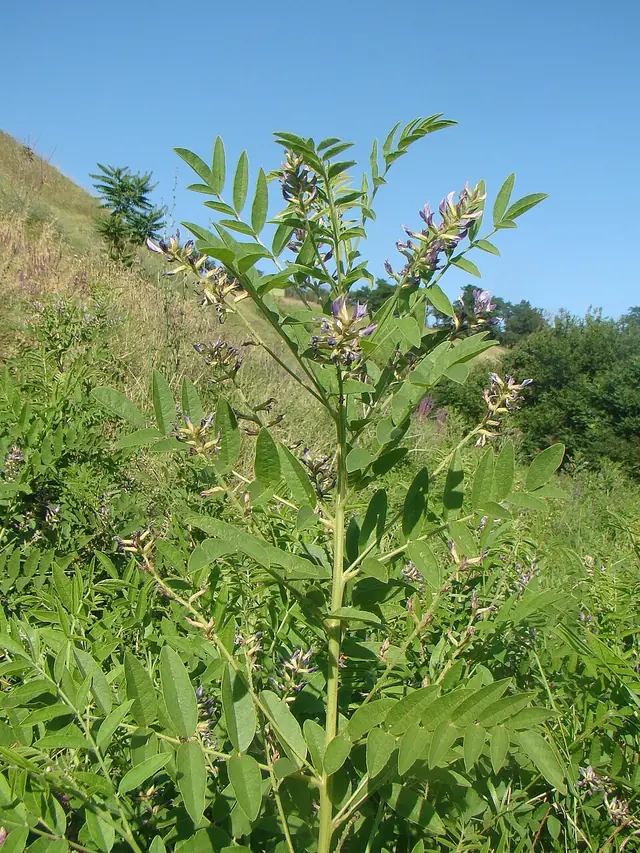
Licorice root is the dried root and underground stems of Glycyrrhiza, a perennial plant of the legume family. Three closely related species supply the trade: G. glabra, native from the Mediterranean to Central Asia, and G. uralensis and G. inflata, which grow further east, chiefly in northern China and Mongolia.
The root tastes sweet because it contains glycyrrhizin, a compound about 50 times sweeter than sugar. The European Pharmacopoeia requires licorice root sold as a herbal drug to contain at least 4% of it. The root and its extract are used in confectionery, drinks, tobacco and herbal medicine.
In Uzbekistan licorice grows wild along the Amu Darya and Syr Darya rivers, including in Khorezm, and it is also grown on plantations. The articles below look at the plant in more depth.
All articles
Licorice Extract in World Trade, 2000–2025: Exporters, Importers and Prices
What UN Comtrade data on licorice extract (HS 1302.12) show for 2000–2025: who exports and imports it, prices per tonne, Uzbekistan's exports, and where the statistics fall short.
Read — Licorice Extract in World Trade, 2000–2025: Exporters, Importers and PricesLicorice (Glycyrrhiza): Botany, Distribution and Ecology, with a Regional Account of Uzbekistan and the Lower Amu Darya
A review of the three licorice species, G. glabra, G. uralensis and G. inflata: how they are told apart, where they grow, the conditions they need and the state of wild stands, with a closer look at Khorezm and the lower Amu Darya in Uzbekistan.
Read — Licorice (Glycyrrhiza): Botany, Distribution and Ecology, with a Regional Account of Uzbekistan and the Lower Amu Darya